|

|
The theme on this Articles
page is the
Concept of SAFETY
in all of these approaches
(especially
well defined in the Polyvagal Theory article).
ARTICLES:
I'm
certificated in Biodynamic
Craniosacral, BSP,
CRM, Safety Sound
Protocol, as a
Holistic Health Practitioner, Herbalist, Reiki
Teacher ------ and
have studied these therapeutic approaches, workshops
from Peter Levine PhD.,
Dr. Stephen Porges, Lisa Schwarz, Stanley
Rosenberg, Christopher and Mary Louise Muller,
Dr. Joe Dispenza, Biofield Tuning, Sensory
Integration-Dr. Robert Scaer, and Upledger
Craniosacral courses.
1. CRANIOSACRAL THERAPY -
BIODYNAMIC - Craniosacral Therapy (I'm here on this
website as a certificated RCST)
www.craniosacraltherapy.org

UPLEDGER INSTITUTE - CranioSacral Therapy (And I'm here)
www.upledger.com
2. POLYVAGAL
THEORY
www.stephenporges.com
www.stanleyrosenberg.com
SAFE and SOUND PROTOCOL
3. SOCIAL ENGAGEMENT PROTOCOL
www.stanleyrosenberg.com
4. SOMATIC EXPERIENCING
www.traumahealing.com
4. EMDR and COMPREHENSIVE RESOURCE
MODELING/CRM and BRAINSPOTTING/ BSP
(I
am here as a certified BSP and in
Comprehensive Resource Modeling)
www.lisaschwarz.com
comprehensiveresourcemodel.com
5. THE TRAUMA SPECTRUM Dr. Robert
Scaer
CRANIOSACRAL THERAPY
and Safety
BIODYNAMIC Craniosacral
Therapy
What is Biodynamic Craniosacral Therapy?
from:
Biodynamic
Craniosacral Therapy Association of North
America ...
https://www.craniosacraltherapy.org
Biodynamic Craniosacral
Therapy is a gentle yet profound non-invasive, hands-on
treatment for the whole body. Performed in a chair or
on a massage table, the client is fully clothed and the
touch is generally light and still. The treatment is
focused on supporting the health of the whole being,
especially the nervous system. This is the
system that dictates all of the body's functioning,
constantly sending and receiving information.
Biodynamic Craniosacral Therapists
understand how an optimally functioning healthy nervous
system performs. We are trained for years to use
acute perception skills to perceive subtle physiological
changes. We also are aware of the energetic map
that underlies one's basic health and symptomology. We
believe that health is never lost no matter what the
ailment. We use our ability to identify the parts
of the nervous system that are not functioning optimally
and our awareness of the "always available health" in
the body to assist the system in bringing itself back
into balance. This supports greater ease and helps the
body decrease symptoms.
WHO CAN
BENEFIT FROM BIODYNAMIC CRANIOSACRAL
THERAPY?
Because of the
gentle non-invasive nature
of Biodynamic Craniosacral Therapy (BCST), there
are few contraindications for treatment. Everyone can
benefit and it can even be enjoyed by those too young,
old, frail or ill for other more manual therapies. The
improvement after a session may be more dramatic with some
clients than with others. Because BCST builds health in the
brain and nervous system, it is effective in assisting
the prevention of chronic conditions, including the
problems of aging, stiffness, dryness, memory loss,
inflammation and immune imbalances.The beauty of the Biodynamic approach
is that it strengthens our whole system and creates a safe
environment, so that the body can gain new perspectives
about unresolved issues, and the Biodynamic Craniosacral
practitioner can facilitate a resolution. Our inner health
is capable, when skillfully supported, of presenting the
strains one at a time, in an order of priorities initiated
by the body, in a way that does not overwhelm the system
but makes it increasingly stronger. We do not need to
remember or relive our traumas in order to benefit from
their resolution.
ARE THERE
MANIPULATIONS INVOLVED?
Biodynamic Craniosacral Therapy is distinguished
by its minimal reliance on manipulations of any kind. If the
various Craniosacral methods could be characterized and
compared based on this criterion, the Biodynamic style
would be placed at the non-manipulative or yin end of the
spectrum.
In
the Biodynamic approach, the healing process comes
from within the client, not from the outside by the
practitioner, and the hand contacts are based on
listening and following/reflecting the client's process
rather than pushing or manipulating the client towards a
theoretical ideal state.
HOW
DOES BIODYNAMIC CRANIOSACRAL THERAPY WORK?
Biodynamic Craniosacral
Therapy begins after a level of safety is created for
the client. This is achieved in the communication between
client and practitioner who together negotiate the space and
contact between therm. Once contact is established, the
practitioner listens deeply to the fluctuations of the
cerebrospinal fluid within the craniosacral system.
A Biodynamic Craniosacral
therapist learns to listen deeply to the system, tapping
into its inherent intelligence, while focusing on the
system remembering its original blueprint of health. The
therapist encourages the client's system to access its
resources, offering new choices and possibilities for the
system at every level. Training, then, includes deep
perceptual and centering skills as well as extensive study
of the anatomy, physiology, and inherent motion of the
craniosacral system.
UPLEDGER
INSTITUTE - CranioSacral Therapy
DR. JOHN
UPLEDGER - Past and
current article
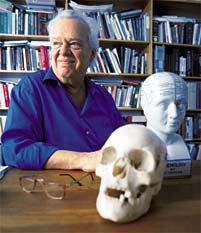 A
New Kind of Pulse A
New Kind of Pulse
By John Greenwald Time.com,
April 16, 2001 - Dr. Upledger died Oct. 26,
2012
While assisting in a spinal
operation in the 1970s, Upledger was startled to notice a
strong pulse in the membranes that surrounded the patient's
spinal cord. He determined that the pulse " which did not
appear in the medical books " was coming from the
cerebrospinal fluid that bathes the brain and spinal cord.
He came to believe that anything that blocked the flow of
this fluid could cause physical and mental distress. "All
these membranes affect brain function," he says, "and when
they're not moving properly, there can be harm."
To free up the
restrictions, Upledger applies light resistance to parts of
the body that seem to be stuck. These frequently include the
bones of the skull, which Upledger says remain mobile
throughout life " a point many medical doctors dispute.
During a craniosacral session, the therapist may gently lift
a person's head to allow a skull bone to shift and the
normal flow of fluid to resume.
How well does it work?
Upledger says the treatments have relieved conditions
ranging from headaches and chronic back pain to autism and
learning disabilities in children " and there is no shortage
of testimonials. He is currently working with Vietnam veterans suffering
from post-traumatic stress
disorder at his clinic in Palm Beach Gardens,
Fla., a facility that has trained some 60,000 craniosacral
practitioners. And while many M.D.s remain skeptical of the
therapy, others have followed the lead of pain-control
centers and physical-rehabilitation units in sending
Upledger their patients.
"What
we do is take away obstacles," says Upledger, "like removing stones from the road."
And that, he might add, has proved far easier than cutting
out an appendix in the center of a storm.
What is
Upledger CranioSacral Therapy? - article from the Upledger Institute - 2013 www.upledger.com
A light touch,
noninvasive technique, CranioSacral Therapy can be safely
used on patients of all ages, from newborns to senior
citizens " and on those with varying degrees of pain. It
complements the body's natural healing processes and
patients report improvement for a wide range of medical
problems including headaches, neck and back pain,
Temporomandibular Joint Syndrome (TMJ), central nervous
system disorders, motor-coordination impairments,
orthopedic problems, neurovascular or immune disorders,
fibromyalgia and other connective-tissue disorders,
learning challenges such as ADD and ADHD, emotional
difficulties, as well as other ailments.
Patients also find
the technique extremely relaxing. It is very effective for
reducing stress and is increasingly being used as a
preventive health measure to bolster resistance to
disease. Learn more
Practitioners of
CranioSacral Therapy represent many disciplines including
massage, physical, and occupational therapists,
chiropractors, medical doctors and osteopathic physicians,
doctors of acupuncture, psychologists, psychiatrists, social
workers, dentists, animal caregivers and others.
Among Dr. Upledger's
outreach programs were work with military veterans
coping with PTSD and the use of dolphins in
conjunction with CranioSacral Therapy.
Most recently since 2015, strides have been made with athletes
suffering from post concussion with the Ricky Williams
Foundation - prnewswire.com
THE
POLYVAGAL THEORY and Safety
including
Safety Sound Protocol
Adapted
from Somatic Psychotherapy Today, Spring
2012
Safety: The Preamble for Social
Engagement An interview with Stephen W.
Porges, Ph.D- By Nancy Eichhorn
Our bodies, brains included, are designed to
respond without thinking. Primed to protect our
personhood via reactionary behaviors, the reliance
of our brain on pre-patterned programming impacts
how we interpret what we perceive and how we react
behaviorally. Yet, if we slow down the
automaticity, if we read our environment from a
state of openness and conscious awareness and
override our internalized,
evolutionarily-organized, knee-jerk response, our
lives change.
To save time, unconsciously of course, our brains
learned to scan and capture parts of experiences
real and written, a glimpse or two, a syllable or
so, and fill in the rest, for better or worse,
right or wrong. And in that instant we determine
the situation, assign meaning, and respond.
Interview with Stephen W. Porges, Ph.D.
 www.stephenporges.com www.stephenporges.com
Dr.
Porges addresses the concept of safety.
Without safety there is no social engagement which
is the precursor for healthy social bonding. The
real issue in therapeutic modeling and
relationships is whether the individual is
safe in the presence of the other,
he said. If safe, then you (the therapist)
have created a neural platform, a biobehavioral
platform appropriate for attachment and social
bonding. If the platform is not safe, if it is
chaotic with unpredictable relationships, it
will fail.
Safety, it seems, is tied to
predictability. If we are in a predictable
environment (geographically as well as
relationally) people may experience a sense of
inner peace and connection; unpredictability
triggers the physiological states of flight/fight
associated with the sympathetic nervous system.
The degree of predictability colors our
experiences, Porges said.
To feel safe in a defined environment and to
turn off our adaptive defensive systems is the
goal of civilization; the underlying strategy to
optimize attachment is to negate evolution,
Porges said. We have wonderful defense systems,
but we cannot create relationships, cannot
access wisdom and creativity unless we can turn
off our evolutionarily programmed defense
systems.
When we are mobilized for defense we give
up access to social engagement components:
benevolence, care, compassion, shared
experiences, he continued. Being
mobilized for defensive states results in biological
rudeness and the whole aspect of what is
gained by being interactive with another cannot
play out because we are in survival mode. The
parts of the prefrontal cortex that give us the
ability to be relational go offline, we cannot
separate beyond good and bad. Our expansiveness,
creativity and social relationships are
hampered.
Addressing our current educational system, Porges
noted that current theory assumes humans are
learning machines which conflicts with the reality
that we are mammals trying to survive. Because
adaptations to survive perceived dangers limit our
processing systems, children who do not feel
safe in the classroom setting cannot process
language. There goes following verbal
instructions.
Children who do not feel safe in their
classroom cannot remain calm. Their bodies
are primed for defensive maneuvers.
Despite the reality of physiological impacts on
learning and engagement, the predominant features
of learning theory minimize the importance of
individual differences and developmental
differences. Colleges of education base their
curriculum on a behavioral level learning model
with no respect for individual development and
state (affective state). By understanding
features of the environment that trigger
sympathetic nervous system responses, we can
change where and how we learn (and work), such
as focusing on low frequency noises and
predictable environments to create states of
safety that promote proximity.
If we are not safe, we are chronically in a
state of evaluation and defensiveness,
Porges added. However if we can engage the
circuits that support social engagement, we
can regulate the neural platform that enables
social engagement behaviors to spontaneously
emerge. From a
Polyvagal Perspective, this is the objective
of therapy.
Our nervous system is bombarded with cues to be on
the alert, to be prepared to protect and defend.
Yet, safe environments are important for
everything we do, especially psychotherapy.
Thinking about various therapeutic approaches such
as Sensorimotor, Somatic Experiencing, and
Mindfulness Meditation, Porges realized that
even these exercises need to be conducted in a
safe environment. Mindfulness meditation,
for example, involves experiencing a state of
non-judgment existence while our defensive system
associated with the sympathetic nervous system is
all about judgment and evaluation. Furthermore, if
someone is practiced in the art of self regulation
during a meditative state, he often loses that
regulatory ability when he returns to the outside
world (and interacts with others).One goal of
therapy, then, might be to help clients regulate
their visceral state both together and then in
varying degrees alone in order to engage and enjoy
interactions with others. Perception involves
a degree of awareness and cognition, while Neuroception
emphasizes that the process also occurs on a
neural basis.
Safety is an embodied experience,
sensed first within the pulse of our blood, the
beat of our heart, the rate of our respiration,
even the sweat on our skin. Our bodies offer
subtle cues, a slight sense of dis- ease, as well
as overt reactions. In social interactions our
bodies function very much like a polygraph,
Porges explained, and we need to learn more
about how to read and to respect the responses
of our body. We have to know that when we feel
uncomfortable there is a reason our body is
feeling uncomfortable; rather than dismissing or
denying this bodily feeling, we need to adapt
and adjust to it.
People are often pushed to evaluate behavior as
good or bad rather than being supported to see the
adaptive function of their behaviors as regulating
physiological and behavioral states.Learn more When we can
view our adaptations as a means to secure survival
and respect how our body and nervous system put us
into a physiological state to survive, Porges
said, "we can also acknowledge that
those same adaptations now hamper our ability
to live fully and creatively and engaged."
Dr Porges, PhD, is a Distinguished
University Scientist at the Kinsey Institute at
Indiana University Bloomington and Research
Professor in the Department of Psychiatry at the
University of North Carolina at Chapel Hill.
He is Emeritus Professor of Psychiatry at the
University of Illinois at Chicago and Emeritus
Professor of Human Development at the University
of Maryland, College Park. He is a former
president of the Society for Psychological
Research and also the Federation of Behavioral,
Psychological, and Cognitive Sciences. He is a
former recipient of a National Institute of Mental
Health Research Scientist Development Award. He
has published more than 200 peer reviewed
scientific papers across several disciplines
including anesthesiology, critical care medicine,
ergonomics, exercise physiology, gerontology,
neurology, obstetrics, pediatrics, psychiatry,
psychology, space medicine, and substance abuse.
In 1994 he proposed the Polyvagal Theory, a theory
that links the evolution of the vertebrate
autonomic system to the emergence of social
behavior. The theory provides a theoretical
perspective to study and treat stress and trauma.
Professor Porges is the author of The
Polyvagal Theory: Neurophysiological
Foundations of Emotions, Attachment,
Communication, and Self-Regulation
(Norton, 2011).
Safe and Sound
Protocol, SSP - developed by Dr.
Porges originating from The Polyvagal Theory
In March 2017, The Safe and Sound Protocol,
formerly the Listening Project developed by
Dr.
Porges, was made available to professionals, as a
five day listening program designed to create the
SAFETY here described. After many trials over the
last few years SSP has been effective in
treating Autism, anxiety and many studies are
underway to determine the effectiveness with other
conditions as well-------------From the website stephenporges.com:
The "Safe and Sound
Protocol" (SSP) is now available for
professional use! Dr Porges has chosen
to work with Integrated Listening Systems
(iLs) to introduce this product to the therapy
market. iLs is a neurotechnology company
that integrates music, movement and language
exercises for the purpose of improving brain
function. The SSP, formerly known as
"The Listening Project Protocol" is based on
more than 40 years of research investigating
relationships between the autonomic nervous
system and social-emotional processes. The SSP
protocol is designed to exercise the neural
regulation of components of auditory system
involved in listening with specifically
processed music.
Research suggests that following
completion of the intervention, individuals
will have reduced auditory hypersensitivities,
improved auditory processing, improved
behavioral and emotional regulation and will
be better able to focus and attend in school,
therapy and everyday life.
SOCIAL ENGAGEMENT
PROTOCOL -Inspiration
for developing the Social Engagement protocol
comes from Dr. Stephen Porges (Brain-Body
Institute, Department of Psychiatry, University of
Illinois, Chicago). In 1996, Dr. Porges
published a paper presenting the "Polyvagal
Theory", a wrote the book The
Polyvagal Theory in
2011.This is a new understanding of the function
of the autonomic nervous system.
Application of Craniosacral Therapy
to The
Polyvagal Theory
- developed
by Stanley
Rosenberg at the SR
Institute in Denmark - working with Dr.
Stephen Porges
 New book by Stanley Rosenberg --2017
,
Accessing
the Healing Power of
the Vagus Nerve:
Self-Help Exercises
for Anxiety,
Depression, Trauma,
and Autism
www.stanleyrosenberg.com
https://www.amazon.com/Accessing-Healing-Power-Vagus-Nerve
https://www.barnesandnoble.com/p/accessing-the-healing-power-of-the-vagus-nerve-stanley-rosenberg
The
Stanley Rosenberg Institute has developed a
special protocol of selected techniques taught by
Osteopath Alain Gehin and Stanley Rosenberg, We
call this unique form of cranio-sacral therapy "The
Social Engagement Protocol" in order to
underline that this is not the usual, popular form
of cranio-sacral therapy, but rather a new and
effective combination of techniques from the
French tradition. In addition to providing the
same benefits that are often ascribed to treatment
with cranio-sacral therapy as listed above, this
new protocol developed by Stanley Rosenberg is
unique in its effectiveness in lifting people from
chronic states of stress (fight/flight) and
depression and (introverted apathy) to a state of
clarity, peace and openness, where they enjoy
being together with other people.
His book, Accessing the Healing Power of
the Vagus Nerve: Self-Help Exercises for
Anxiety, Depression, Trauma, and Autism
is
wonderful, practical both for therapists
and for self-help !
SOMATIC EXPERIENCING
- SE
Founder of SE is Peter Levine, Ph.D www.traumahealing.com www.traumahealing.com
Peter Levine is a contemporary psychologist
specializing in trauma. He developed Somatic Experiencing therapy.
Professional Life
Peter Levine received his doctorate in medical biophysics from the
University of California at Berkeley and another in psychology
from International University.
Levine worked for NASA as a stress consultant while the Space
Shuttle program was being developed and has shared his expertise
while teaching at various facilities throughout the world,
including pain clinics, hospitals, and treatment centers. He is
particularly interested in the effects of trauma and oppression on
indigenous populations; he is a member of World Psychologists for
Social Responsibility, an organization dedicated to forming
effective responses to ethnic and political warfare and wide
ranging disasters.
Levine is the founder of Somatic Experiencing (SE), and he
established the Foundation for Human Enrichment in Boulder,
Colorado, to serve as a training facility for SE practitioners.
Levine is a faculty member of the Santa Barbara Graduate
Institute, and his 1997 book on trauma, Waking the Tiger:
Healing Trauma, was a bestseller.
Contribution to Psychology
Levine developed Somatic Experiencing therapy, an approach
that grew out of Levine's observations of wild animals. He noted
that animals tended to recover relatively quickly from traumatic
events and that humans may benefit from adopting the trauma
recovery behaviors animals use.
The autonomic nervous system (ANS) is responsible for regulating
automatic body functions such as heart rate, digestion, and
respiration. Levine argues that the symptoms commonly associated
with trauma such as fear, flashbacks, and a heightened startle
reflex are the result of trauma-induced disruptions in the
autonomic nervous system. The goal of treatment is to enable the
ANS to re-regulate itself.
In their definition of trauma, practitioners include both one-time
traumas and developmental traumas, such as neglect or abandonment,
and focus on helping a client to gain awareness of emotions and
physical reactions. In the early parts of therapy, clients are
encouraged to increase their emotional and sensory awareness,
progressing to awareness of physical tension in the body. Somatic
Experiencing practitioners argue that trauma causes chronic
tension because the body's fight or flight system was not able to
fully react to the trauma.
SE also uses a technique known is titration, which is
common in other trauma treatments, such as exposure therapy. The
client is progressively exposed to more and more of her trauma,
usually by talking about it and processing the physical and
psychological sensations it causes. As a client progresses in
treatment, he or she will discuss more traumatic elements of the
experience. Through treatment, clients are encouraged to develop
resources, which are any forms of assistance that help the ANS to
self-regulate. The therapist also uses pendulation, which involves
helping a client become unregulated and then enabling him or her
to progress back to self-regulation. This approach is thought to
help the client regulate the ANS independently.
References:
Cross, J. (2007, Sep 13). The Healing Space: Somatic Experiencing
Releases and Relieves Trauma. The Taos News.
Peter A. Levine. (n.d.). Sounds True. Retrieved from
http://www.soundstrue.com/shop/authors/Peter_A_Levine
Peter Levine is the author of the best selling book Waking
the Tiger - Healing Trauma, (published in twenty
languages) as well as four audio learning series for Sounds True
including the book CD, Healing Trauma, a Pioneering Program in
Restoring the Wisdom of Our Bodies; and Sexual Healing,
Transforming the Sacred Wound. He is the co-author of
Trauma through a Child's Eyes, Awakening the Ordinary
Miracle of Healing. And Trauma-Proofing Your
Kids, A Parents Guide for Instilling Confidence, Joy and
Resilience.
COMPREHENSIVE
RESOURCE MODEL
 Comprehensive Resource Model
developed by Lisa
Schwarz M.Ed, strengthens
and enhances internal resources and allows contained,
gentle, yet deep processing work with attachment issues
and dissociative disorders.(www.comprehensiveresourcemodel.com)
Comprehensive Resource Model
developed by Lisa
Schwarz M.Ed, strengthens
and enhances internal resources and allows contained,
gentle, yet deep processing work with attachment issues
and dissociative disorders.(www.comprehensiveresourcemodel.com)
Lisa Schwarz is the co author of
The Comprehensive Resource Model, with Frank
Corrigan, Alistair Hull and Rajiv Raju, published in 2017.
she is a licensed psychologist, consultant, international
educator and the developer of the Comprehensive Resource
Model (CRM).
From the website: (where you will find me as a
practitioner)
The Mission of CRM
To remember, re-process, and release traumaatic
material from the nervous system in order to provide the
opportunity for re-connection to one's true self, the
meaning of the truth of one's life and to the ability to
embody love in one's actions.
CRM is a neuro-biologically based trauma treatment model
which facilitates targeting of traumatic experiences by
bridging the most primitive aspects of the person and
their brain, to the purest, healthiest part of the self.
"Brainspotting or BSP and Comprehensive
Resource Model, CRM are based on the profound attunement
of the therapist with the patient, finding a somatic cue
and extinguishing it by down-regulating the amygdala. It
is not just PNS (Parasympathetic Nervous System)
activation that is facilitated, it is homeostasis."
Robert Scaer, M.D., The Trauma Spectrum
EMDR
/ BRAINSPOTTING
 DAVID GRAND, Ph.D., author
of This is Your
Brain on Sports and Emotional
Healing at Warp Speed: The Power of EMDR, DAVID GRAND, Ph.D., author
of This is Your
Brain on Sports and Emotional
Healing at Warp Speed: The Power of EMDR,
and Brainspotting: The
Revolutionary New Therapy for Rapid and Effective
Change.
(www.brainspotting.pro/) Where
you will find me as a practitioner
David Grand,
Ph.D., the developer and trainer of Brainspotting,
is an internationally recognized trauma expert. He is the
author of Emotional
Healing
at Warp Speed: the Power of EMDR.
Dr. Grand has also
been part of a research team using fMRI scans to study the
effects of trauma on the brain. Committed to the worldwide
use of trauma healing as a tool to ease human suffering,
Grand is the former chairman of the EMDR-Humanitarian
Assistance Program. He has coordinated pro bono trainings of
trauma therapists in Northern Ireland and inner city
Brooklyn, N.Y.
Dr. Grand has been
featured on NBC Nightly News, Dateline, CNN, the New York
Times, the Washington Post, Newsday and O Magazine.
Brainspotting
works with the deep brain and the body through its
direct access to the autonomic and limbic systems
within the body's central nervous system.
Brainspotting is accordingly a physiological
tool/treatment which has profound psychological,
emotional, and physical consequences.
A "Brainspot" is the eye position which is
related to the energetic/emotional activation of a
traumatic/emotionally charged issue within the brain, most likely in the amygdala, the hippocampus,
and/or the orbitofrontal cortex of the limbic system.
The maintenance of that eye position/Brainspot within the attentional
focus on the body's "felt sense" of that issue or trauma
stimulates a deep integrating and healing process
within the brain. This processing, which appears to
take place at a reflexive or cellular level within
the nervous system, brings about a de-conditioning
of previously conditioned, maladaptive emotional and
physiological responses. Brainspotting
appears to stimulate, focus, and activate the body's
inherent capacity to heal itself from trauma.
Article is from
(www.brainspotting.pro/)
Learn more
TRAUMA SPECTRUM
- Historical and
Physiological Overview of Trauma
Robert
Scaer, MD -
neurologist - author
The Trauma
Spectrum, and The Body Bears the Burden
- Adapted from
The Trauma Spectrum, written in 2005, with permission of
the author, Dr. Scaer - a comprehensive overview of
the origins of the most leading edge trauma modalities
mentioned so far.
The effect of the experience of trauma over the
life span lays the seeds for most chronic, poorly
understood disease processes that defy explanation by our
current concepts of health and disease. These chronic
diseases make up the majority of symptoms for which
patients present to doctor's offices.
The Brain /
Mind / Body Continuum - The brain, mind, and body exist on a
continuum, wherein sensory input from the body shapes
and changes the structure and function of the brain,
which concurrently shapes and alters the body in all
of its parts -- particularly those that provided the
sensory input to the brain. The brain and body are
intimately inter-related rather than two distinct
parts of the greater whole. These two parts of the
continuum form a dynamically changing servo system,
constantly and reciprocally adapting based on the
influence of the other. The mind is a receptacle for perceptual experience,
including body sensations or feelings, and the
positive or negative emotions that are related to that
information. The mind is based on brain activity and
is the conscious manifestation of what we sense and
feel based on the dynamic interaction of the brain /
body.
Threat and Trauma - A life-threatening experience, either real
or imagined, may also become a traumatic experience if
it occurs in a state of helplessness. The field of
psychology accepts the premise that such trauma
affects the mind. Through imaging studies we now know
that trauma affects the structure and physiology of
the brain as well. If we accept the idea that the
mind, brain and body exist on a continuum, then we
must also consider the ways in which trauma affects
the brain / body. Ideally, the brain / mind / body
uses what it learns from a traumatic event to develop
resiliency and fortify the individual against future
similar occurrences. However, depending on the
individual's prior experience and the nature and
outcome of the event, the trauma may actually lead to
dysfunctional physiological change in both the brain
and body. The dynamic interaction of the brain / body
in turn sends cues to the mind affecting what it
senses, feels and perceives. If the brain / body has
been overly conditioned and sensitized to react to
life threats, the mind will perceive threat in
situations where none may exist. This hypersensitivity
to threat amounts to what I call 'the imprisonment of
the mind' - a state in which the mind is primed to
perceive threat, is continually assaulted by and
frozen in the past, and cannot conceive of a self that
is free of physical and emotional pain.
Reality and
Our Senses - Our concept of reality is tightly bound by
the amount of meager information that our sensory
organs are able to provide us at any given time. Other
species possess organs of sensory perception that we
totally lack. The entire function of the brain / mind
/ body continuum is altered by the nature and quality
of the sensory information that the senses provide.
The Brain -
The brain is defined as a plastic, fluid, and
ever-changing electrical / chemical / structural
system that generates new synapses and neurons and
discards old ones in response to sensory / emotional /
experiential input. Life experience therefore changes
the brain permanently in the way that it specifically
reacts to subsequent similar experiences.
Conditioning
and
Unconscious Knowledge - Unconscious learned behavior is all species
is primarily directed toward survival-based
activities. This behavior is established primarily
through the repeated chance association of successful
forms of complex behavior with escape from a
life-threatening situation or with access to a
life-sustaining reward. The behavioral patterns which
emerge from this learned association are called conditioning.
Like Pavlov's experiments
which showed how animal behavior is classically
conditioned, these conditioned responses, which are based on cumulative life
experiences, are the basic means by which
species accumulate knowledge to enhance survival.
Because this knowledge must be available at all times
and at a moment's notice -- and must be independent
from the complexity of conscious problem solving -- it
is basically unconscious knowledge. Such unconscious knowledge constitutes the
primary source of learning and behavior, not only in
animals but also in human beings. Although the brain's
reciprocal responses to sensory experience are central
to its role, they may be corrupted by traumatic
experiences which drastically alters its ability to be
an effective participant in the goal of survival.
Trauma and
Learned Responses - Traumatic life experiences often contribute
to learned habits of movement and posture that reflect
the self-protective movement patterns associated with
those threats. Many of these trauma-related movement
patterns affect the way that we move, sit and stand.
They may lead to patterns of movement and posture that
are abnormal and they may inhibit our normal
coordination and our learning of other desirable motor
skills.
Self-protective
movement and postural patterns of the experienced trauma are
stored in the brain and the body's survival memory. These
learned dysfunctional patterns persist because they are, in
a metaphorical sense, necessary for defense against future
threats similar to those that elicited the defense in the
first place.
If traumatic memories are implanted in the brain,
internal cues (such as dreams, imagined scenarios, and
memories) as well as sensory information from the external
environment will evoke motor, autonomic, somatic, and
visceral responses to a perceived threat. This process is
almost entirely unconscious and occurs typically before any
conscious recognition or awareness.
The Fight /
Flight / Freeze Response - All animals must have the capacity to learn
from life-threatening experiences. All animals learn
to survive through the functions of the areas of the
brain that process information through a complex
behavioral process that has been termed ' the fight / flight /
freeze response'. The brain pathways and behaviors in this
response are common to all animals from reptiles to
primates. But these instincts only form a template on
which exposure to a series of life threats builds
specific survival skills. Whether one fights or flees
when exposed to a threat must be learned very quickly
through such experiences. The information from these
learning experiences must be stored in unconscious
form in order to be of use in the survival game. It
must be capable of triggering a predictable behavioral
response learned through trial and error without
thinking or planning. The process through which we
learn these survival skills is called classical
conditioning, a term coined by Pavlov (1926).
The capacity to
initiate the fight / flight response is determined by the
sympathetic nervous system - one of the two branches of the
autonomic nervous system. The sympathetic nervous system is
responsible for activating the cardiovascular and motor
systems of the body and for making available the extra
energy for the vigorous physical activity required to fight
or flee.

The Freeze Response - Sometimes fight or
flight options are no longer available. Under these
circumstances a third survival option is available:
the freeze response. The freeze response, common to
all species, indeed may allow the animal to survive,
but in mammals it sometimes comes at a terrible cost.
Animals who survive the freeze response experience an
unconscious 'discharge' of all of the energy and stored memories of the threat and failed
escape through stereotyped body movements as the
animal 'awakens'. If they don't experience this
discharge, a host of adverse behavioral and health
problems may follow. Classical conditioning in this
context can fool the brain and lead to a host of
inappropriate and ineffectual survival behaviors. When
this happens we may say that 'trauma' has occurred.
When fight or flight are
unsuccessful or not possible, a third instinctual and
quite unconscious option will be exercised. The animal
collapses and becomes immobile. This is the freeze response. If the freeze response is successful in
preventing the animal from being killed, the animal
will gradually emerge from immobility.
The freeze response is made possible through the
functioning of the parasympathetic nervous system. When
the parasympathetic response is very strong or extreme,
the animal in freeze is in a precarious state of
abnormally dysregulated and fluctuating autonomic nervous
system activity.
One of the expressions of the freeze response in
humans is the phenomenon of dissociation. Dissociation is reflective
of a state of shock, stunning, trance, numbing of
emotion and cognitive fogging. Dissociation is
physiologically the same as the freeze.
The work of Peter
Levine showed that PTSD patients
experienced a dramatic clearing of many of their
symptoms when they were allowed to complete the
motor discharge of their freeze response through
unique therapeutic behavioral techniques. In the
absence of of this freeze discharge, the 'energy' of
the intense arousal associated
with the threat and attempted escape remains bound in
the body and brain, leading to a host of abnormal
symptoms that we attribute to PTSD. Levine also noted
that repeated freeze events without discharge seemed
to be cumulative, adding to a progressive worsening of
post-traumatic symptoms and to the development of
progressive helplessness in the face of threat.
The varied
symptoms of trauma, of which a small number are
included under the diagnosis of PTSD, fall under the
definition of conditioned responses. These symptoms
are incredibly varied. They include abnormal memories (e.g. flashback
images, intrusive conscious memories, recurring
physical sensations, nightmares), abnormal arousal
(e.g. panic, anxiety, startle), and numbing (e.g.
confusion, isolation, avoidance, dissociation). Their
broad spectrum of expression of these symptoms reflect
a dysfunction involving the brain and most of the
regulatory systems of the body (i.e. autonomic,
endocrine, and immune). They are based on a disruption
of the usually modulated regulation of brain centers
that govern arousal, emotional tone, memory, and
perception.(The core of this problem is the fact that
procedural and declarative memories for the traumatic
event, and the conditioned sensory perceptions and
reflex motor responses associated with those memories,
continue to replicate
failed efforts of successful fight or flight
responses.
The
Neurophysiology of Threat and Trauma - The frontal and central areas of the right
cerebral hemisphere are the regions in the brain which
attend to the arousal response and to threatening
information. The parts of the brain that function in
an executive fashion (e.g. thinking, planning,
communicating, using any type of rational thought)
are, in general, not essential for the execution of
emergency behavior.
Typically,
the first level of information that warns us of an
impending threat is accessed and received by the
primary senses (smell, vision and hearing). Messages from these basic senses are routed to
the locus ceruleus or blue center - a tiny cluster of cells in
the brainstem. The locus ceruleus sends the message on the the amygdala (the 'olive') which is the center for memory of
emotionally laden information. Because of its function as the storehouse and
processor of emotionally charged experiences, the amygdala plays a crucial role in the mediation of the
response to a perceived / conditioned threat
experience. Therefore, any part of the brain receiving
information which has been processed by the amygdala is likely to be influenced significantly by
the emotional conditioning attached to the threat experience.
The amygdala then sends messages to the hippocampus (the 'sea horse'), as well as to other parts
of the brain. The hippocampus forms a conscious structure for the
threat-based message that includes its emotional /
conditioned importance, and then sends it on to the orbitofrontal cortex, the master regulator of survival behavior
(both conscious and unconscious). The orbitofrontal cortex then sends information to many parts of the
brain which may then organize and initiate the
necessary behavior patterns which can help the
individual survive. It also activates the body's
endocrine response through the hypothalamic /
pituitary / adrenal (HPA) axis. The hypothalamus is a center deep in the
middle and base of the brain. In addition to regulating
many other complex functions (e.g. sleep and appetite),
it also regulates the autonomic
nervous system. In the case of a threat, the
sympathetic nervous system (the energy-burning survival
part) is activated. The pituitary gland (the master endocrine gland)
is also activated and initiates the body's endocrine
response.
The pituitary
gland, through the hormone adrenocorticotropic
homone
(ACTH) stimulates the adrenal
glands to release cortisol, which puts a brake on
norepinephrine - thus modulating the brain's arousal
response.In the event that the individual survives the
immediate threat, cortisol also prepares the animal to
manage ongoing stress through changes in its
circulation, metabolism, and immune responses.
This complex
interaction of nerve centers, glands, and chemicals is
typical of the multiple interactive feedback systems by
which the body is designed to not
only
survive a threatening event, but also to regulate itself
and to promote stability of the entire organism. (Adaptation
printed here with permission of the author.)
|
|