|

|
untitled
CREATIVE
LEARNING AND PERFORMANCE
Victoria
Behrends - Craniosacral therapist, Holistic Health
Practitioner, Masters in Liberal Arts, CA teaching
credential
I've
worked with many different occupations and
professional folks over the years and one of my first
loves has been directing productions that involved
acting, music, dance and writing.
There is a level of performance that is competent
and a level that can be fantastic and great ! Some
of the people I work with are most interested in
being great at what they do or what they study in
their education.
If that is you, and you would
like to find out more about how to build your
quality in the Arts, or in learning information in
the educational setting, you can speak to me or
make an appointment at 760-753-1493.
we can work in person if you are near San Diego or
Los Angeles and/or we can work very effectively by
distance if you are far.
As
a teacher, artist and performer, I have participated
in, directed and instructed creative and learning
performances throughout my own professional,
educational and personal life and can speak with
firsthand experience of these fields. It is without
doubt that physical and emotional trauma and stress
and anxiety
can impact creative and learning performances. I've
also taught English learners for over twenty years,
along with the subject areas of Visual and Theater
Arts. There are new strategies and solutions with
craniosacral therapy and Brainspotting that I've
seen, experienced and used that can greatly help and
resolve difficulties for artists and learners. Here
are the specific Arts, activities and teaching areas
that I have worked with for years and now use the
expansion techniques discussed, with effective
results.
CREATIVE
LEARNING and PERFORMANCE
The discipline
of Visual Artists, Actors, Martial Artists,
Dancers, Musicians, Writers and Public Speakers
can often be impacted
by forms of anxiety, stage fright, panic attack,
writer's block, and to injury left recorded in the
body and mind. There can be current or past physical
and/or emotional trauma. There might be early
negative direction, instruction, or environment.
There are times when the core performance of the
actor and other artists can be unfulfilled potential
or even lower quality than past performances have
been due to fear and emotional or physical pain.
Sometimes early training can itself be a source of
stress and anxiety during and in later years.
Physical injuries both related and unrelated to
performance can have an effect on the artist's life,
and anxiety and panic attacks often result.
Also, in areas of Test Taking and Language Learning, English
Learning Development, Technical and Medical Fields there are concrete
examples of success or less than optimum work when
stress and anxiety overwhelm the student's efforts to
perform. Test anxiety can appear and/or study skills
evaporate from current and past stress and even
unrelated trauma can bar the success of planned test
taking strategies hard won by that student. When the
goal is a language to learn, especially ELD for
students, it is difficult enough overcoming the fear
of being in the
classroom as a new person, often from another country,
let alone to "learn the english".
 Actors, Dancers, and Musicians can all experience
creativity barriers to wonderful human performance
onstage. The actor who develops extreme stage fright
or an occasional panic attack, even late in a career
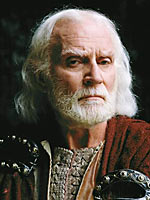
(as did the great Sir Laurence Olivier in King Lear) finds it may have
been a result from an old injury or current trauma
that makes overcoming anxiety difficult to handle
and coping with stress becomes impossible. Dancers, and often
particularly ballet dancers frequently incur
injuries that may sideline them permanently without
strategies and treatment to get them back onstage
and in one piece. Actors, Dancers, and Musicians can all experience
creativity barriers to wonderful human performance
onstage. The actor who develops extreme stage fright
or an occasional panic attack, even late in a career
(as did the great Sir Laurence Olivier in King Lear) finds it may have
been a result from an old injury or current trauma
that makes overcoming anxiety difficult to handle
and coping with stress becomes impossible. Dancers, and often
particularly ballet dancers frequently incur
injuries that may sideline them permanently without
strategies and treatment to get them back onstage
and in one piece.
Musicians have
their own unique relationship with their vocal and
physical instruments, that can be strained over time
and young musicians must be trained carefully to
include the development of voice and musical
discipline that is age appropriate, in order to have
long lasting careers. Writers and Artists often find themselves
blocked, staring at a blank canvas, screen, page
wondering where did the rendering, painting,
character, idea, or words go? Public speaking is
an art that demands resolving the fear of public
speaking at the very beginning of the career, and
organization, public speaking tips and a good speech
writer is not enough for amateur and professional
speakers to rely on without anxiety help. Martial
Arts require exact training, not just of the
body but the mind, and there can be barriers erected
through injury or other circumstances that get in
the way of precision and the art of the martial arts
practice.
I've worked with
considerable success and fulfillment with all of
these fields, both with craniosacral therapy and
Brainspotting. overcoming sometimes huge obstacles
and releasing fear and past and sometimes recent
traumatic experience that gets in the way of the
best Creative and Learning Performance possible.
 In addition to
physical and psychological therapies, there are
complementary modalities, and there are strategies
that can benefit these artists, as well as visual
Artists and Public Speakers. Stress relief and
anxiety help can come in the form of breath work,
energy exercises, craniosacral therapies,
Brainspotting and other modalities. In addition to
physical and psychological therapies, there are
complementary modalities, and there are strategies
that can benefit these artists, as well as visual
Artists and Public Speakers. Stress relief and
anxiety help can come in the form of breath work,
energy exercises, craniosacral therapies,
Brainspotting and other modalities.
Injuries can be
alleviated with Craniosacral Therapy and the trauma
involved can be directly addressed and resolved with
both cranial work and Brainspotting. Old and new
creativity barriers to best performances can be
shifted and changed to enhance the work of the
actor, musician, martial artist and dancer who may
have been literally stopped in their tracks with
injury or apprehension, after years of study and
performance in their field.
In addition, there are
effective strategies and therapies that can make a
huge difference to the creative performer and learner
who has not had obvious trauma and stress but who has
not achieved the level of excellence that is required
to succeed.
What it means to
perform onstage involves: Characterization, stage
movement, blocking, lyrics, dance routines and
choreography, orchestration, rehearsals, stage combat,
learning lines and music and much more--these are all
HARD work and all enormous undertaking. Overcoming
anxiety and overcoming fear are often part of the
territory of that creative work.
Musicians and Singers
find that BSP opens possibilities of vocal range and
instrumentation technique, often overwriting
negative direction or training or even physical
trauma. Brainspotting is helpful in achieving new
levels and layers of developing technique and stage
presence.
 
 In many university
research studies Test taking anxiety has been proven to
lower scores in a testing environment. Often a panic
attack during or before a test can paralyze a student
with fear. It is possible to reduce anxiety with test
taking strategies that include Brainspotting and the
help of an experienced craniosacral therapist to calm
the nervous system. In many university
research studies Test taking anxiety has been proven to
lower scores in a testing environment. Often a panic
attack during or before a test can paralyze a student
with fear. It is possible to reduce anxiety with test
taking strategies that include Brainspotting and the
help of an experienced craniosacral therapist to calm
the nervous system.
When testing or
instruction of English for students is
the goal, overcoming anxiety can be even more
difficult, and yet English language learning or
learning a new language as an English speaker
can be improved with the same modalities
mentioned. Overcoming fear in any educational
setting is possible with stress relief and
anxiety help and strategies that the student can
continue to use on their own.
This is also true of
the
Writer. Writer's block can
be dissolved and the freelance writer, the technical
writer, the medical writer, the author who is
writing short stories or online writing can go on
writing quality work and meet the deadlines imposed
that add further to anxiety. Creative writing can
benefit from Brainspotting to remove angst, trauma
and anxiety that may be impacting the work.
The visual Artist's performance can grow with Creative
Performance enhanced by Brainspotting. Barriers to
that creativity and technique in making Art can be
removed and excellence. originality and productivity
is developed further. New design and painting
techniques is fostered, on canvas or computer, in
sculpture, fine art, photography, or any media,
without being hindered by creativity barriers,
further developed with BSP.
The Martial Artist,
young or old, beginning or with years of experience
can hone skills and remove blocks to stronger, more
centered performance for personal fulfillment or for
competition. With the two modalities of Brainspotting
with Creative Performance and Learning techniques many
athletes have excelled. David Grand Ph.D developed BSP
out of EMDR that he was using for many years in
empowering athletes with sports psychology and found
that BSP worked more completely and for a longer time.
(This Is Your Brain On Sports, David
Grand, Alan Goldberg)
 "if you focus on your goals, you can
accomplish anything." Korean saying
"if you focus on your goals, you can
accomplish anything." Korean saying
In Martial Arts there is a sustained energy,
requiring ongoing constant mind and body awareness,
practice and skill--BSP can greatly enhance the
martial arts training and practice in regular
training, but also release fear from injury or
trauma that has been experienced and can have an
effect on recovery. BSP is being shown to enhance
athletic performance in athletes and Brainspotting
is effective with both children and adults training
in martial arts. I often combine Craniosacral
Therapy with BSP for the best results in overcoming
fear and recovering from injury or anxiety about
competition and training.
In
my small grandson's first day of Tang Soo Do at four years
old, his first Korean Martial Arts instructor taught "The
Black Belt Focus" to a group of little ones from 3 to five
years:
I focus my eyes
I focus my
mind
I focus my body
They listened carefully and repeated
and understood what he meant. With that training,
they will learn the skills they need in all of the
areas of their lives. It's a pretty accurate
description of how BSP can work, for those who
didn't have the opportunity of martial arts training
!
In
my experience as a stage director, I have been
honored to often have ALL of these fields brought
together in one place, in Theatre productions,
even including martial arts ! It was completely
essential to have all performers, creative and
learning, work together as a team to the fullest
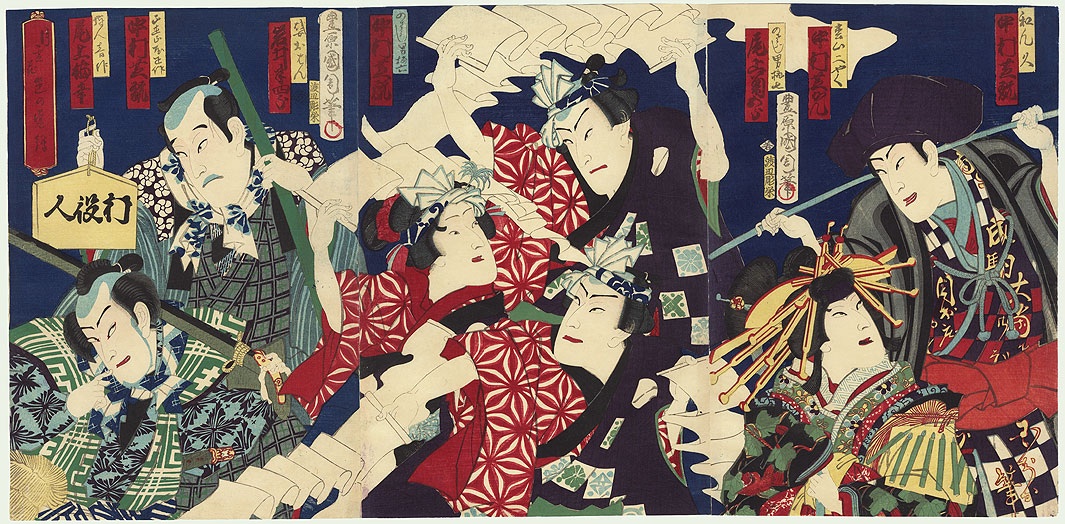
potential. I do recall, years ago, directing an
experimental production very much like the
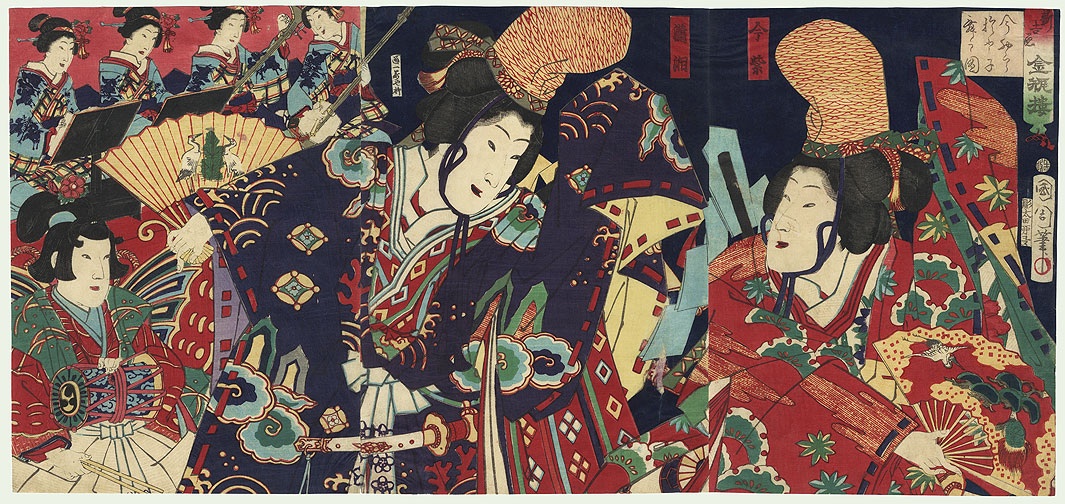
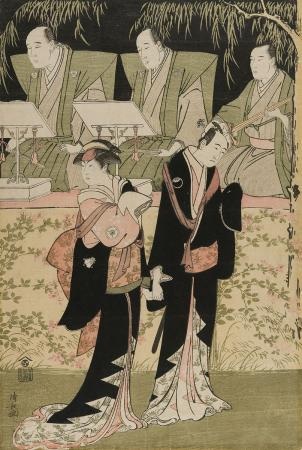
Japanese woodblock below (including the Kabuki
stage makeup ! ) and it would have been a great
benefit to have had access then to the knowledge
and modalities discussed in these pages. Now I
have worked with professionals in the in
Business, Education, and in Visual and
Performing Arts, including my former student, R.
Lowe above, performing in CHICAGO on
Broadway in his standing role for a number of
years.
So again, if you have interest in these really
effective techniques to reach a high level of
performance in ANY field...contact me at
760-753-1493 or visit my contact page.
|
|